
Ecommerce fulfillment is the end-to-end process of storing inventory, picking and packing orders, and shipping them to customers after an online purchase. Most growing brands outsource fulfillment to a 3PL (third-party logistics provider) to reduce shipping costs, eliminate warehouse overhead, and deliver faster without hiring operations staff. ShipCalm is a full-service ecommerce fulfillment partner built for brands that want speed, accuracy, and hands-on support as they scale.
Introduction
Ecommerce fulfillment is what happens after a customer clicks “buy.” It covers everything from receiving your inventory at a warehouse to getting the right product to the right customer, on time and in perfect condition. For new online sellers, it’s often the part of the business that grows most painful, most quickly.
This guide is for ecommerce brand owners and founders who are new to fulfillment and want to understand how the process works, what their options are, and when it makes sense to hand it off to a professional. By the end, you’ll know exactly what ecommerce fulfillment involves, what it costs, and what to look for in a fulfillment partner.
What Is Ecommerce Fulfillment?
Ecommerce fulfillment is the complete process of moving an online order from your inventory to your customer’s doorstep. It includes every step between a customer placing an order and that order arriving at their door: receiving inventory, storing it, picking items, packing boxes, shipping packages, and handling returns.
It’s not just shipping. Fulfillment is the entire operational backbone of an online store, and it directly affects delivery speed, order accuracy, shipping cost, and customer satisfaction. Done well, it’s invisible to the customer. Done poorly, it generates complaints, returns, and lost revenue.
Learn more about ShipCalm’s ecommerce fulfillment services
How Ecommerce Fulfillment Works: Step by Step
Step 1: Receiving Inventory
The fulfillment process starts when your products arrive at the warehouse. Every inbound shipment is checked against an Advance Shipping Notice (ASN), inspected for damage, scanned, and logged into a Warehouse Management System (WMS). Each SKU is assigned a bin location so it can be retrieved quickly when an order comes in.
This step matters more than most new sellers expect. Errors at receiving flow downstream into every pick, pack, and ship operation that follows.
Step 2: Warehousing and Storage
Once received and cataloged, your inventory is stored in the fulfillment center. Storage is typically charged by the pallet, bin, or cubic foot depending on your provider. Good fulfillment partners organize warehouse zones strategically, placing fast-moving SKUs closest to packing stations to reduce pick times.
For growing brands, multi-location warehousing matters. Storing inventory in fulfillment centers on both coasts, as ShipCalm does with facilities in Southern California and Indianapolis, reduces average transit time and last-mile shipping cost.
Step 3: Order Processing
When a customer places an order on your Shopify, Amazon, or WooCommerce store, it flows automatically into the WMS via integration. The system generates a pick list, assigns the order to a picker, and triggers the fulfillment workflow. The faster and more accurate this handoff, the sooner the order ships.
Most professional 3PLs process and ship orders within 24-48 hours of receipt, with same-day processing for orders placed before a daily cutoff.
Step 4: Picking
Picking is the process of retrieving items from storage based on the order’s pick list. Fulfillment centers use several picking strategies depending on order volume and warehouse layout:
- Single-order picking: One picker fulfills one order at a time, common in smaller operations
- Batch picking: One picker retrieves items for multiple orders simultaneously, improving efficiency
- Zone picking: Pickers are assigned to specific warehouse zones and hand off items to the next zone, ideal for high-volume operations
Accuracy at this step is critical. A mispick means the wrong item ships to the customer, triggering a return, a reship, and a customer service interaction.
Step 5: Packing
Once items are picked, they move to the packing station. Packers select the right box size, add protective materials, include any inserts or custom packaging, and seal the order. The label is printed, applied, and the package is confirmed complete in the WMS.
Proper packaging protects your product in transit and shapes how customers experience your brand at unboxing. ShipCalm supports custom packaging and kitting for brands where the unboxing experience is part of the product.
Step 6: Shipping
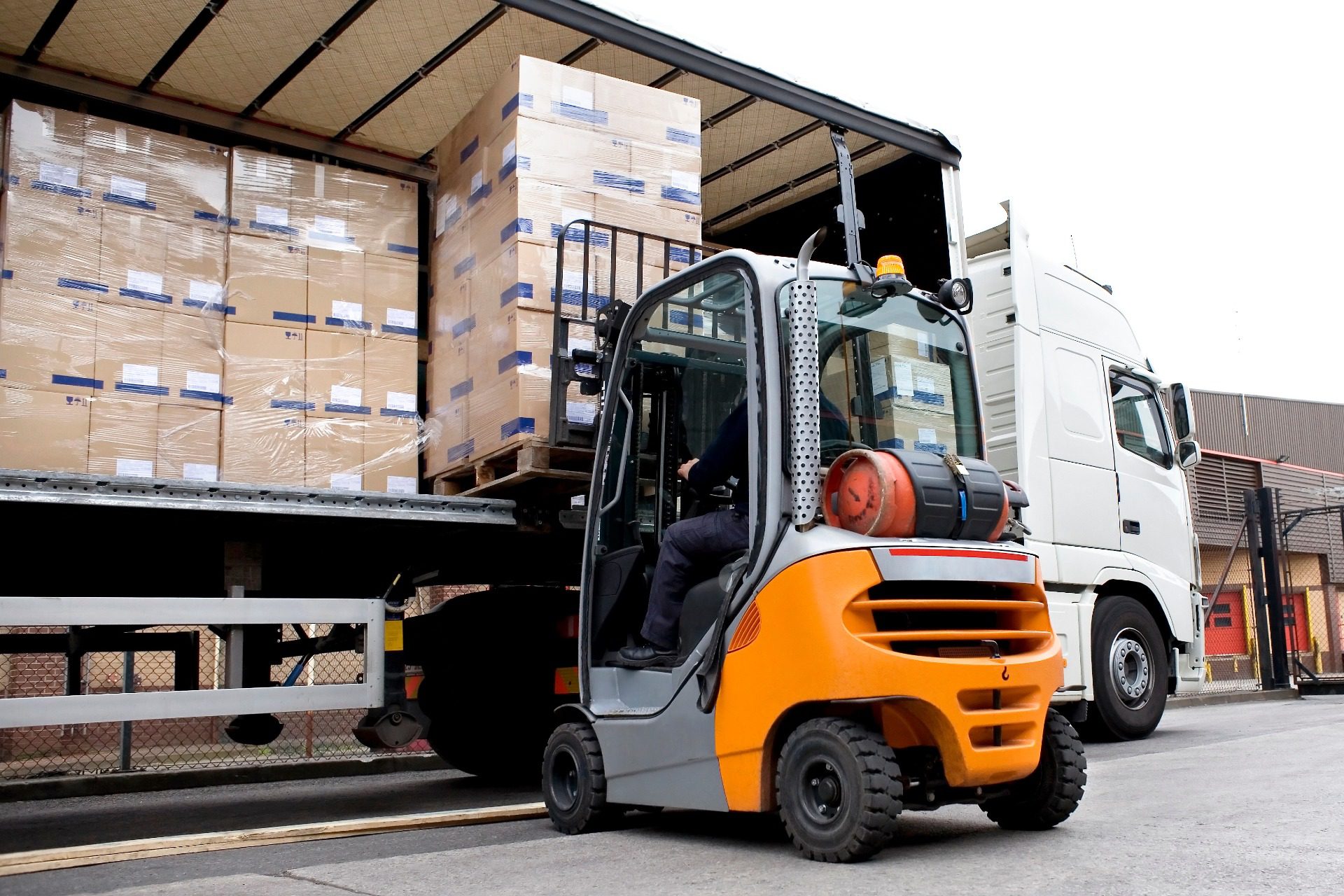
With the order packed and labeled, it’s handed to a carrier for delivery. Fulfillment centers work with multiple carriers (UPS, FedEx, USPS, DHL) and use shipping rate software to select the most cost-effective option for each order based on destination, weight, dimensions, and required delivery speed.
Because 3PLs ship high volumes across all their clients, they access discounted carrier rates that individual brands typically can’t negotiate on their own. Those savings are passed on to you.
Step 7: Returns Management
Returns are an unavoidable part of ecommerce. A professional fulfillment partner handles reverse logistics: receiving returned items, inspecting them, restocking sellable inventory, and processing refunds or exchanges. Efficient returns processing protects cash flow and keeps inventory records accurate.
Ecommerce Fulfillment Models: Which Is Right for You?
There are four main fulfillment models available to ecommerce brands. The right one depends on your order volume, product type, growth stage, and how much operational control you want to maintain.
In-House Fulfillment
You manage everything yourself, from a home, office, or leased warehouse. This gives you maximum control and works well at very low volumes (under 50-100 orders per month), but it doesn’t scale. As order volume grows, packing and shipping consumes time that should be spent on marketing, product development, and customer acquisition.
Dropshipping
Your supplier ships orders directly to customers on your behalf. You never handle inventory. This eliminates upfront inventory cost and fulfillment overhead, but you give up control over packaging, shipping speed, and product quality. It’s best for testing new products, not for building a brand with repeat customers.
Amazon FBA (Fulfillment by Amazon)
You send inventory to Amazon’s fulfillment network, and Amazon picks, packs, and ships your orders. FBA gives access to Prime shipping and Amazon’s carrier network, but comes with strict packaging requirements, limited branding control, and fees that can erode margins. It works best for brands whose primary or sole channel is Amazon.
Third-Party Logistics (3PL)
You outsource fulfillment to a specialized logistics company that manages warehousing, picking, packing, shipping, and returns on your behalf. A 3PL like ShipCalm integrates directly with your Shopify, Amazon, TikTok Shop, or Walmart storefront and handles operations while you focus on growth. This is the most scalable model for brands selling across multiple channels.
What Does Ecommerce Fulfillment Cost?
Fulfillment costs vary by provider, product size, order volume, and services used. Here are the main cost categories to understand:
Receiving fees: Charged when inventory arrives at the fulfillment center. Typically per pallet, per carton, or per hour of labor.
Storage fees: Charged for warehousing your inventory. Usually calculated monthly by pallet, bin, or cubic foot.
Pick and pack fees: Charged per order, covering the labor to retrieve items, pack them, and prepare them for shipment. Typically $2-5 per order for standard items.
Kitting fees: Charged for assembling multi-item bundles or custom packaging before or during fulfillment.
Shipping fees: The carrier cost to deliver each order. Your 3PL’s negotiated rates are typically 15-40% below retail carrier rates.
Returns processing fees: Charged per returned unit for inspection, restocking, or disposal.
As volume grows, per-unit costs typically decrease. ShipCalm publishes transparent pricing and offers custom quotes for brands with specific volume or kitting requirements.
When Should You Switch to a 3PL?
Most ecommerce brands start fulfilling orders themselves. Here are the clear signals that it’s time to outsource:
- You’re spending more than 10-15 hours per week on packing and shipping
- Orders are taking longer than 48 hours to ship
- You’ve missed orders or shipped the wrong items due to volume
- You’re unable to offer 2-day shipping because you have a single location
- You’re planning to expand into new sales channels (Amazon, TikTok Shop, Walmart)
- You’re approaching a major sales event (Black Friday, product launch, crowdfunding fulfillment) that will spike volume
A 3PL removes the operational ceiling from your growth. Instead of hiring warehouse staff and leasing space as you scale, you plug into existing infrastructure that’s already built for it.
How to Choose the Right Ecommerce Fulfillment Partner
Not all 3PLs are the same. Here’s what to evaluate before signing:
Location and coverage: Where are their fulfillment centers? A provider with facilities on both coasts enables 2-day ground shipping to most of the U.S. population, dramatically reducing shipping costs compared to air freight.
Platform integrations: Does their WMS integrate directly with your storefront? Look for native connections to Shopify, Amazon, WooCommerce, TikTok Shop, and Walmart. Manual order uploads create delays and errors.
Order accuracy and speed: Ask for documented SLAs on order accuracy and same-day processing cutoffs.
Pricing transparency: Avoid providers with opaque fee structures. You should be able to model your per-order cost before signing. ShipCalm publishes its pricing and builds custom quotes so there are no surprises.
Scalability: Can the provider handle Black Friday volume, a viral TikTok moment, or a crowdfunding surge without degrading service?
Account management: Will you have a dedicated point of contact, or will you submit support tickets into a queue? For growing brands, direct access to a logistics expert is a material advantage.
See how ShipCalm supports omnichannel ecommerce brands
Ecommerce Fulfillment and Multi-Channel Selling
As brands grow, they typically expand beyond a single storefront. A customer might discover your product on TikTok Shop, research it on your Shopify site, and reorder on Amazon. Each channel generates orders that need to be fulfilled from the same inventory pool.
Without the right fulfillment infrastructure, multi-channel selling creates oversell risk, inventory discrepancies, and inconsistent shipping experiences. A modern 3PL unifies all channels into a single inventory view and routes each order to the optimal fulfillment location automatically.
ShipCalm supports B2B and retail fulfillment alongside DTC orders, including EDI-compliant shipments to major retailers. That means a single fulfillment partner can handle your Shopify DTC orders, your Amazon FBA replenishments, and your Target or Walmart wholesale shipments simultaneously.
FAQ
What is the difference between ecommerce fulfillment and shipping?
Shipping is one step within ecommerce fulfillment. Fulfillment covers the full process: receiving inventory, warehousing it, picking and packing orders, handing packages to carriers, and managing returns. Shipping is the carrier leg, the movement from fulfillment center to customer door.
How long does ecommerce fulfillment take?
Most professional 3PLs process and ship orders within 24-48 hours of receipt, with same-day shipping available for orders received before a daily cutoff (typically 12-2 PM local time). Transit time from the carrier adds 1-5 business days depending on destination and service level.
Can a small ecommerce brand afford a 3PL?
Yes. Many 3PLs, including ShipCalm, have no minimum monthly order volume requirements. The per-order cost of outsourcing fulfillment is often lower than the true cost of fulfilling in-house once you factor in labor, packaging materials, carrier rates, and time. ShipCalm works with brands from early-stage through high-volume scale.
What integrations should an ecommerce fulfillment partner support?
At minimum: Shopify, Amazon, and WooCommerce. For growing brands, also look for TikTok Shop, Walmart, BigCommerce, eBay, and EDI compatibility for retail distribution. ShipCalm integrates with 60+ platforms and marketplaces.
What happens if my fulfillment partner makes an error?
A reputable 3PL will own the error, reship at no cost to you, and document the root cause. When evaluating providers, ask specifically about their error resolution SLA and whether they have order accuracy guarantees. ShipCalm guarantees no loss of inventory due to theft, damage, or mismanagement within their facilities.
Conclusion
Ecommerce fulfillment is not a back-office function. It is a direct driver of customer satisfaction, repeat purchase rates, and brand reputation. Getting it right means choosing the right model for your growth stage and partnering with a provider that can scale with you without compromising speed or accuracy.
For brands ready to move beyond self-fulfillment, ShipCalm offers full-service ecommerce fulfillment with no order minimums, coast-to-coast coverage, transparent pricing, and dedicated account management.
Ready to hand off fulfillment and get back to growing your brand? Get a custom quote from ShipCalm today.